
-250x250.jpg "Filamento PLA TEXTURE WOOD - Madera - 1.75mm - Sakata3D")
SAKATA 3D: 3D printing filament manufactured in Spain
SAKATA 3D Filaments is a Spanish manufacturer specialising in the development and production of filaments for FDM/FFF 3D printing. Manufactured in Spain and backed by extensive experience in polymer processing, its materials are intended for individual users and makers as well as professional, educational and industrial applications.
The portfolio ranges from widely used materials such as PLA and PET-G to formulations designed for improved mechanical performance, high-speed printing, outdoor exposure, flexibility and engineering applications.
Representative product families include PLA 850, PLA HR-870, PLA High Speed PRO, PET-G, ASA, ABS-E, FleX-920, PA-CF15 and the RE range of recycled materials.
Filament manufactured in Spain
SAKATA 3D manufactures its filaments in Spain and operates from Peligros, Granada.
The company builds on several decades of experience in polymer processing and began specialising in filament for additive manufacturing in 2013.
This background supports work in areas including:
- Raw-material selection.
- Material formulation.
- Extrusion-process control.
- Filament diameter and consistency.
- Colour and surface-finish development.
- Engineering materials.
- Recovery of material generated during production.
For professional users, Spanish manufacturing can also be relevant when considering availability, continuity of supply and access to technical documentation.
SAKATA 3D PLA filament
PLA represents a particularly important part of the SAKATA 3D portfolio.
Rather than offering one generic PLA formulation, the company provides several product families for different applications and printing requirements:
- PLA Go&Print for straightforward general-purpose printing.
- PLA 700.
- PLA 850 based on Ingeo 3D850.
- PLA HR-870 based on Ingeo 3D870.
- PLA High Speed PRO for faster printers.
- PLA-M with a matt finish.
- PLA Wood with a wood-like effect.
- Silk, fluorescent and other specialist finishes depending on the range.
This makes it possible to select PLA according to performance and appearance rather than colour alone.
PLA Go&Print for straightforward 3D printing
SAKATA 3D Go&Print is intended to provide straightforward processing on FDM/FFF printers.
Its low-shrinkage behaviour and good bed adhesion make it useful for models, prototypes, decorative components and general-purpose parts.
Typical applications include:
- Users beginning with 3D printing.
- Education.
- Visual prototypes.
- Figures and models.
- General-purpose components.
- Applications where ease of processing is a priority.
Final settings should always be adjusted for the particular printer, hotend, nozzle diameter and printing speed.
PLA 850 for prototypes and functional components
PLA 850 is one of the most characteristic SAKATA 3D formulations.
It is manufactured from NatureWorks Ingeo 3D850, a PLA grade specifically developed for additive manufacturing.
Compared with conventional PLA, it is intended to provide improved mechanical behaviour, rapid crystallisation and low shrinkage during printing.
SAKATA 3D particularly positions it for:
- Functional prototypes.
- Tooling.
- Detailed models.
- Components requiring good dimensional stability.
- Applications requiring greater performance than basic PLA.
PLA 850 is also available in a particularly broad selection of colours and finishes.
PLA HR-870 for increased performance
PLA HR-870 is based on Ingeo 3D870 resin and is intended to provide improved mechanical and thermal characteristics compared with conventional PLA formulations.
One of its most useful characteristics is the possibility of applying a post-print heat treatment or annealing process to promote crystallisation.
SAKATA 3D states that suitable post-processing can significantly increase thermal performance compared with standard PLA.
This makes HR-870 interesting for:
- Functional parts.
- Tooling.
- Mechanical prototypes.
- Components exposed to higher temperatures than conventional PLA can normally tolerate.
- Selected industrial applications.
Annealing can produce dimensional changes and should therefore be considered during the design of components requiring tight tolerances.
PLA High Speed for faster 3D printers
Modern 3D printers can operate at substantially higher speeds and accelerations than earlier machines.
SAKATA 3D offers PLA High Speed PRO for applications where higher material throughput is required.
High-speed printing involves more than simply increasing movement speeds. The filament must absorb thermal energy and flow through the hotend consistently at the requested volumetric rate.
Actual productivity depends on the combination of:
- Filament.
- Hotend.
- Volumetric flow.
- Nozzle.
- Part cooling.
- Machine speed and acceleration.
High-speed formulations are particularly relevant to modern CoreXY machines and printers used for production.
SAKATA 3D PET-G filament
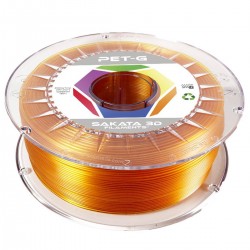
PET-G is one of the most versatile materials for manufacturing functional parts by FDM/FFF.
It combines relatively straightforward processing with useful mechanical performance, strong layer adhesion and low shrinkage.
SAKATA 3D PET-G can be used for applications including:
- Housings.
- Brackets.
- Tools and fixtures.
- Functional prototypes.
- Electrical and electronic components.
- Everyday-use parts.
Compared with PLA, PET-G generally provides less brittle behaviour and greater deformation before failure.
Carbon-fibre-reinforced PET-G
For more technical applications, SAKATA 3D also offers PET-G CF15 reinforced with carbon fibre.
Adding fibre alters material stiffness and mechanical behaviour while producing the characteristic matt technical appearance associated with many carbon composites.
This type of material can be particularly useful for:
- Tooling.
- Lightweight structural components.
- Brackets.
- Engineering prototypes.
- Mechanical parts.
Carbon-fibre-filled materials are abrasive, so an abrasion-resistant nozzle is recommended instead of a conventional brass nozzle for regular use.
ASA for outdoor applications
ASA is particularly useful for components that will remain exposed to weathering and sunlight.
Its mechanical properties are similar in many respects to ABS, while offering significantly better resistance to ultraviolet radiation and outdoor ageing.
This makes it suitable for applications including:
- Outdoor housings.
- Vehicle components.
- Outdoor brackets and fixtures.
- Machine components.
- Industrial applications.
- Parts subjected to long-term sunlight exposure.
ASA experiences thermal contraction and generally produces more consistent results in an enclosed printer, particularly as component size increases.
Appropriate workspace ventilation is also recommended during printing.
ABS-E
SAKATA 3D also offers ABS-E for applications requiring properties associated with the ABS family.
ABS remains useful for functional components because of its mechanical and thermal behaviour, although it requires more controlled printing conditions than PLA or PET-G.
An enclosure, stable ambient temperature and correctly prepared first layer can help minimise warping and inter-layer cracking.
PA-CF15: reinforced nylon for engineering applications
One of the highest-performance materials in the SAKATA 3D portfolio is PA-CF15.
It is a thermally stabilised copolyamide reinforced with 15% carbon fibre and is specifically intended for industrial and engineering applications.
Characteristics highlighted by the manufacturer include:
- High stiffness.
- Strong mechanical properties.
- Chemical resistance.
- Improved thermal performance.
- Relatively low shrinkage for a polyamide-based material.
This type of filament requires more careful handling than general-purpose polymers. Polyamides are hygroscopic and can absorb atmospheric moisture, so correct drying and storage become particularly important.
An abrasion-resistant nozzle is also required because of the carbon-fibre reinforcement.
FleX-920: a flexible alternative to conventional TPU
FleX-920 is one of the more distinctive materials developed by SAKATA 3D.
It is a flexible formulation intended as an alternative to conventional TPU/TPE filaments, combining elastic behaviour with relatively straightforward processing.
Applications can include:
- Bump stops and dampers.
- Belts.
- Flexible mechanisms.
- Protective components.
- Impact-resistant parts.
- Components designed to deform during use.
Current SAKATA 3D product pages and technical documents show slightly different Shore hardness figures between revisions, so where exact hardness is critical we recommend consulting the technical datasheet for the particular product or batch being used.
RE range: recycled 3D printing filaments
SAKATA 3D also produces an RE- family using material recovered from its own filament-manufacturing processes.
The range includes recycled versions based on several familiar polymers, including PLA, PET-G and flexible formulations.
This approach returns recoverable polymer to the production process rather than automatically treating it as waste.
Because the input material can vary, colour may change between production batches, making these products particularly appropriate where functionality is more important than exact colour matching.
Sustainable materials and circular use of polymers
SAKATA 3D has developed recycled materials and production measures intended to reduce resource consumption for several years.
The company states that its dedicated recovered-material development began in 2018 and describes measures including water recovery and more efficient resource use within production.
In additive manufacturing, sustainability should be considered across the complete material lifecycle, including raw-material origin, manufacturing, part service life, reuse and end-of-life treatment.
High-volume and large-format 3D printing
SAKATA 3D also supplies options intended for large-format printers and users with high filament consumption.
Larger spool formats can be particularly useful for:
- 3D print farms.
- Professional manufacturing services.
- Businesses producing small and medium production runs.
- Large-format 3D printers.
- Jobs consuming several kilograms of material.
Reducing spool changes can simplify long production runs, provided that the printer's spool holder and feed system are capable of handling the additional weight.
Colours and specialist finishes
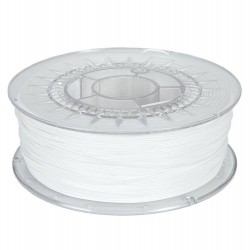
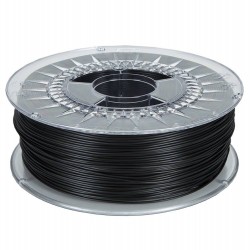
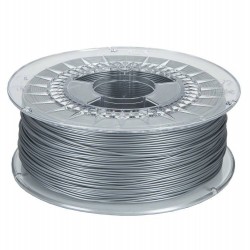
Alongside mechanical performance, SAKATA 3D offers an extensive selection of colours, surface effects and finishes.
Depending on the material family, these include conventional solid colours, fluorescent and pastel shades, Silk effects, matt finishes and specialist filled materials such as wood-effect PLA.
This variety is useful for:
- Presentation prototypes.
- Figures and models.
- Product design.
- Decorative applications.
- Colour identification of components.
- Production runs requiring a defined appearance.
Choosing the right SAKATA 3D filament
The broad material range makes it possible to select a filament according to the actual function of the component:
- PLA Go&Print: straightforward general-purpose printing.
- PLA 850: prototypes and functional parts requiring improved performance.
- PLA HR-870: applications requiring improved thermal and mechanical behaviour.
- PLA High Speed PRO: fast printers and higher productivity.
- PET-G: versatile and durable functional components.
- ASA: outdoor components and UV exposure.
- FleX-920: flexible applications.
- PA-CF15: engineering applications.
- RE range: applications where recovered material is preferred.
Polymer selection should be based on operating temperature, mechanical load, environmental exposure, flexibility, appearance and the printing conditions available.
SAKATA 3D at HTA3D
At HTA3D, we have worked with SAKATA 3D filament for years and select materials from its portfolio for both general 3D printing and professional or technical applications.
Spanish manufacturing, a broad choice of formulations and an extensive colour range make it possible to cover anything from straightforward PLA projects to functional parts manufactured from PET-G, ASA and reinforced engineering polymers.
SAKATA 3D is particularly interesting for users looking for 3D printing filament manufactured in Spain while still being able to choose between different levels of mechanical, thermal and processing performance.
Before printing, we recommend consulting the parameters for the exact material and tuning them to the machine being used. Temperature, speed, cooling, build surface, nozzle and filament drying can all significantly affect results, particularly with technical polymers such as ASA, polyamide and fibre-reinforced composites.